
OpenAI Brings Its Advanced AI Models to Google Cloud in Major Enterprise Push
OpenAI and Google Cloud have announced a partnership to bring OpenAI's advanced AI models and Codex coding workflows to Google Cloud's Model Garden. The move gives enterprise customers another way to access frontier AI models through existing cloud infrastructure, while intensifying competition in the enterprise AI market.
Written by
Anifoards Insights
Published
October 21, 2026
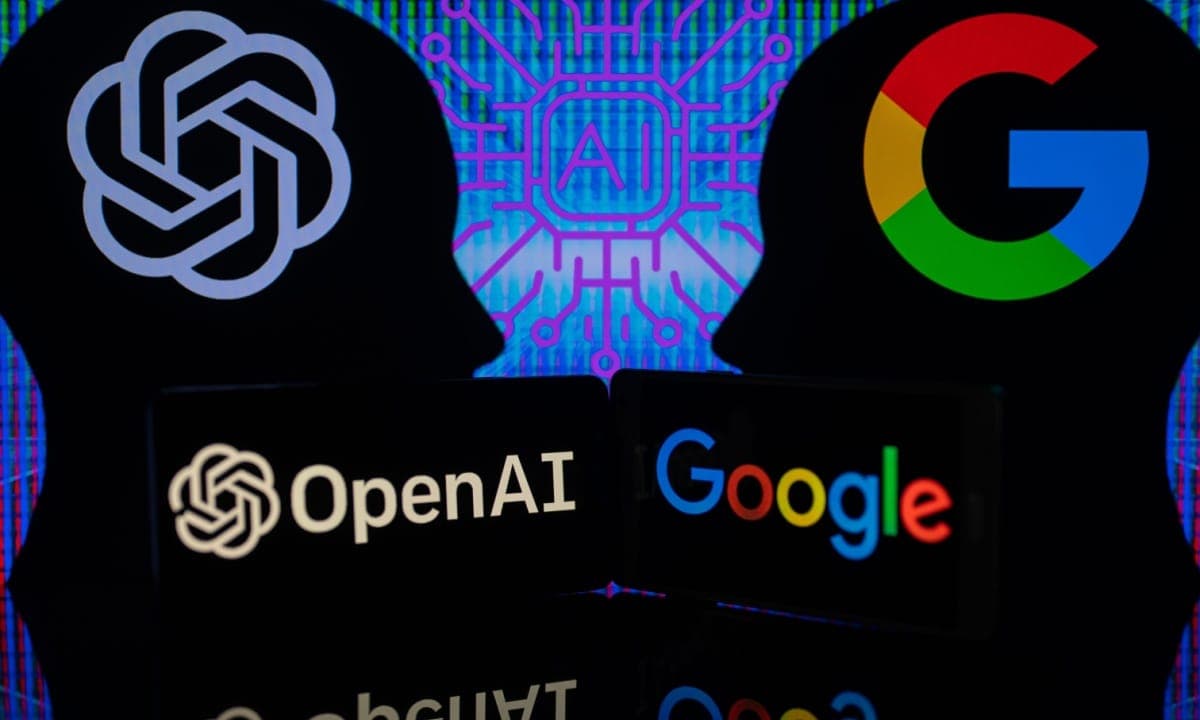
OpenAI Brings Its Advanced AI Models to Google Cloud in Major Enterprise Push
OpenAI and Google Cloud have announced a partnership that will make OpenAI's advanced AI models and Codex agentic workflows available through Google Cloud's Model Garden. The development marks a significant expansion of enterprise access to OpenAI technology and highlights the growing competition among cloud providers to become the primary platform for deploying artificial intelligence.
The announcement means businesses using Google Cloud will be able to access OpenAI models within an environment they may already use for software development, data processing, and enterprise applications.
According to OpenAI's official announcement of its Google Cloud partnership, the integration is designed to help organisations build and operate complex AI-powered workflows using Google's cloud infrastructure and enterprise data-governance capabilities.
What Has OpenAI Announced?
The partnership will bring OpenAI's frontier models and Codex coding workflows into Google Cloud's Model Garden, giving enterprise customers another way to discover and deploy AI capabilities.
Instead of managing separate infrastructure arrangements for every AI application, eligible customers will be able to access OpenAI models through Google Cloud's existing purchasing and deployment environment.
Google Cloud says the models will be available through its marketplace, allowing customers with existing cloud spending commitments to apply those commitments to eligible purchases.
The companies said general availability is planned for the coming weeks. The announcement therefore establishes the partnership, while broader access will depend on the rollout schedule.
### Why This Partnership Matters ### Enterprise AI adoption is increasingly moving beyond experiments and demonstrations. Businesses want to integrate AI into software development, customer support, research, internal operations, and complex workflows that involve multiple steps.
These applications require more than access to an AI model. Organisations also need infrastructure, security controls, identity management, data governance, and predictable ways to manage costs.
By making OpenAI models available through Google Cloud, the partnership gives customers another route to incorporate AI into existing technology environments.
For businesses already using Google's cloud services, access through the same platform could simplify procurement and integration. It may also make it easier for organisations to evaluate different models without rebuilding their entire infrastructure around a single provider.
Codex and the Rise of AI Agents
An important part of the announcement is the inclusion of Codex agentic workflows.
AI agents can perform multi-step tasks by combining reasoning, software tools, code execution, and other capabilities. In software development, such systems can assist with writing code, understanding repositories, investigating errors, and completing defined engineering tasks.
However, running these workflows reliably requires more than a capable model. Businesses must also consider permissions, testing, monitoring, data access, and human review.
Making Codex workflows available through Google Cloud could help enterprise teams explore these applications within their existing cloud environments.
The practical impact will depend on how organisations implement the tools, which workloads they support, and whether the systems deliver measurable improvements in productivity and quality.
Google Cloud's Enterprise AI Strategy
The partnership strengthens Google Cloud's position as a platform for businesses seeking access to multiple AI models.
Many organisations prefer to choose models according to the task rather than depend on a single provider for every application. A company might prioritise coding performance for one workflow, cost efficiency for another, and stronger reasoning or specialised capabilities for a third.
Offering OpenAI models alongside other options gives Google Cloud customers additional flexibility when making these decisions.
Google Cloud's infrastructure and enterprise controls are also relevant for regulated industries, where organisations need to manage access to sensitive information and maintain oversight of AI systems.
The announcement reflects a broader industry trend: cloud platforms increasingly compete not only through their own models but also through the range of AI technologies they make available to customers.
What This Means for Microsoft and the Cloud Market
The announcement is notable because Microsoft has been a major cloud partner for OpenAI. OpenAI has stated that Microsoft remains its primary cloud partner, so the Google Cloud arrangement should not be interpreted as the end of that relationship.
Instead, the development points towards a wider distribution strategy in which OpenAI technology can reach enterprise customers through additional channels.
For cloud providers, access to leading AI models can help attract developers, increase platform usage, and strengthen relationships with businesses building AI applications.
For enterprise customers, greater availability may create more choice. However, organisations will still need to compare performance, costs, contractual terms, security requirements, and integration complexity before selecting a platform.
What Happens Next?
The next stage will be the rollout of OpenAI models through Google Cloud's Model Garden and the availability of the associated agentic workflows.
Businesses will be watching how quickly access expands, which models become available, and how effectively the integration works with existing cloud systems.
The partnership's long-term significance will depend on enterprise adoption and whether customers can use the new access route to build reliable, cost-effective AI applications.
Conclusion
OpenAI's partnership with Google Cloud is a significant development in the enterprise AI market. By bringing advanced models and Codex workflows into Google Cloud's Model Garden, the companies are offering businesses another route to adopt AI within their existing technology environments.
The move highlights the growing importance of model choice, enterprise infrastructure, and AI agents as companies move from experimentation towards practical deployment.
Microsoft remains OpenAI's primary cloud partner, but the new arrangement demonstrates that access to frontier AI is becoming more distributed across the cloud ecosystem.
For businesses, the central question will be whether this expanded choice makes AI easier to deploy securely, efficiently, and at scale.
Community
Comments
Sign in to join the conversation.
Sign inContinue reading
More from Breaking

Oil Hits Five-Month High as Middle East Escalation Raises Global Energy Crisis Fears
Global oil prices have climbed to their highest levels in more than five months amid escalating Middle East tensions and concerns about potential disruptions to energy supplies and shipping routes. A sustained increase in crude prices could raise transportation costs, intensify inflationary pressure and create fresh uncertainty for businesses and financial markets worldwide.